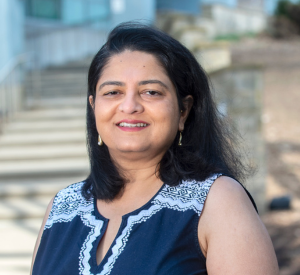
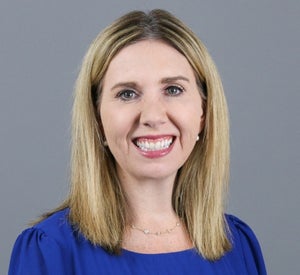
The University of Pittsburgh Department of Occupational Therapy sends new PhD graduates into the world carrying fresh discoveries, hard-earned findings and a deep sense of the community that helped get them there. This year, two of those graduates, Anadil Bayazeed (PhD ‘26) and Ghaleb Almalki (PhD ‘26), completed dissertations for the School of Health and Rehabilitation Sciences (SHRS) PhD in Rehabilitation Science program that are pushing forward stroke recovery.
Bayazeed looked at why patients don’t use their more-affected arm in daily life, and Almalki looked at what’s happening inside the brain of patients who have supposed limited potential left to recover. Together, their work over five years at Pitt tells a fuller story of what it takes to move a field forward and the essential support required to get to those answers.
Two Questions, One Shared Drive to Find Answers
Bayazeed and Almalki arrived at their dissertation topics from clinical experience that didn’t match what the research showed.
Bayazeed spent time in hospital and outpatient clinics before and during her master’s degree in occupational therapy program, and taught neurorehabilitation at King Saud bin Abdulaziz University for Health Sciences in Saudi Arabia. She kept noticing the same pattern: “Although patients with stroke have therapy gains, especially in motor skills, they still didn’t use their more affected upper limb in the real-world setting.” Since most interventions focus heavily on motor training, she set out to identify other “active ingredients” that could explain that gap between clinic and daily life.
Almalki, who taught neuroscience at King Saud bin Abdulaziz University for Health Sciences while working with stroke patients in a hospital setting, was struck by a different inconsistency: treatments like constraint-induced movement therapy worked well for some patients but not others. That observation raised a question, “Why do the same interventions succeed for some individuals and fail for others?” The answer was in the recovery mechanisms that a current one-size-fits-all approach didn’t account for.
Each of their questions sought to explain why motor skill alone doesn’t always amount to recovery. Something else behavioral, neurological, or both, was missing from the picture.
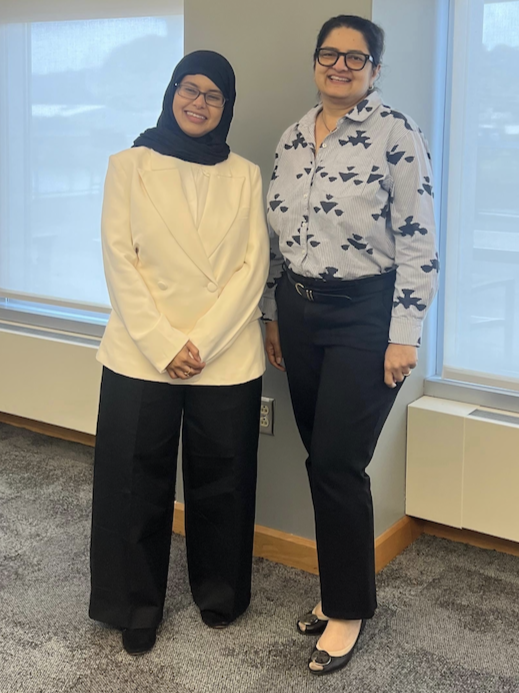
Anadil Bayazeed: The Behavioral Side of Recovery
Bayazeed’s dissertation mapped different factors of more-affected arm use. She had participants wear movement sensors on their wrist at home for three days to capture real-world, more-affected arm use outside the clinic. She then explored the prediction of a comprehensive set of factors for more-affected arm use. She also used semi-structured interviews to explore facilitators and barriers of arm use. The results of each methodology showed that perceived quality of upper limb use, along with motivation, were key factors shaping real-world more-affected arm use and not motor skill alone.
This blend of methods wasn’t originally planned. Bayazeed describes herself as fundamentally an “experimental,” quantitative researcher but Ketki Raina, professor and director of the PhD in Rehabilitation Science program, brought behavioral and qualitative expertise that helped guide Bayazeed and reshaped the project. “That’s what I like most about my dissertation,” she said, “being able to do the quantitative part and also the qualitative and behavioral component.”
Her takeaway for clinicians: motor training remains essential but isn’t enough alone. Perceived arm-use quality and motivation are modifiable factors that, addressed alongside motor training, could improve outcomes. Her data didn’t support self-efficacy as a significant finding most likely because, she suspects, no arm-use-specific self-efficacy measure exists yet. Developing better tools and interventions is on her future research list, along with using movement sensor data to show patients concrete evidence of their own arm use as a motivational tool.

Ghaleb Almalki: The Neurological Side of Recovery
Where Bayazeed looked at behavior, Almalki looked at the brain itself. Using non-invasive brain stimulation, he investigated which brain regions may take over motor function after the primary motor cortex (M1), typically responsible for executing movement, is significantly damaged. His findings showed that this reorganization is severity-, time- and task-dependent. For people with milder strokes, M1 remains heavily involved in recovery. But for those with moderate to severe stroke, several non-primary motor areas become more active instead, including the contralesional and ipsilesional dorsal premotor areas, the contralesional intraparietal sulcus, the dorsolateral prefrontal cortex and the cingulate motor area.
His second research aim tackled a long-standing gap in stroke research: patients with moderate to severe stroke are frequently excluded from neuromodulatory studies, largely because a standard diagnostic assessment, a single-pulse transcranial magnetic stimulation (sTMS), often fails to detect a measurable signal between their brain and hand muscles. Rather than accepting that absence of signal as proof of “no potential,” Almalki tested two pulses delivered while participants were at rest or while they actively contracted the target muscle. Some individuals who showed no response to a single pulse at rest did respond to the paired-pulse approach which may indicate a brain-hand connection still existed in patients written off as having plateaued.
The clinical implication is significant: patients assumed to have poor recovery potential are often steered toward compensatory strategies rather than restorative rehabilitation. “We need not to give up on them,” Almalki said. “There are connections between the brain and the hand which could be harnessed.”
The PhD Experience
The graduates described their five years in the SHRS PhD in Rehabilitation Science program in similar terms of a sequence of milestones that built on each other. Bayazeed started her program amid the pandemic, arriving at an all-virtual first semester unlike anything she’d expected. Even so, she found a department that showed up for her, exposing her early on to technologies like transcranial magnetic stimulation, motion capture and robotic therapy through a bioengineering collaboration.
Almalki described a similar story in his PhD journey. This included core courses that were built toward the preliminary exam, which prepared him for the comprehensive exam, which in turn built the foundation for his dissertation proposal. “I feel like these milestones taught me a lot,” he said, “and helped build on each other to reach the final goal.” He also learned, the hard way, that research rarely goes according to plan. After a year developing a stimulation protocol that showed promising preliminary patterns, those patterns became less consistent as additional participant data were collected. “Don’t give up, and don’t feel discouraged when the results are not what you expected,” he said. “Keep the passion up.”

Mentorship, Community and Family
Bayazeed and Almalki pointed to mentorship as central to their success, and both experienced a change of their primary mentor partway through the program which gave them an opportunity to broaden their research skills.
For Bayazeed, that was Raina, whose behavioral and qualitative expertise opened up a new dimension of her dissertation. She also appreciated Raina’s mentorship style, where even the smallest achievements were worth celebrating and she was encouraged to take things one step at a time. Raina and former faculty member Amit Sethi contributed to Bayazeed’s growth as a researcher, shaping her decision-making skills.
Almalki credited Assistant Professor Emily Grattan and Sethi with shaping his development as a researcher and reinforcing the importance of rigor and careful decision-making throughout the research process.
The wider Pitt OT and SHRS community also contributed to their success. Bayazeed pointed to senior PhD students who supported her early on and to an interdisciplinary core-course structure she shared with students from occupational therapy, physical therapy and health informatics. Almalki described the department in almost identical terms: “They just take you by hand and walk you through it. They want to see you succeed.”
Family showed up in their reflections, too. Bayazeed had a baby during her PhD, crediting her husband, daughter, parents and sisters for their support and the department’s understanding as she balanced being a PhD student and new mother. “It took a village,” she said, “and that village was my Pitt OT.” Almalki echoed the same phrase almost word for word, describing how his wife, daughter, mother, brother and sisters supported him through every milestone: “It’s a village.”
Advice for the Future PhD Student
Asked what they’d tell future students, both gave advice that reflected their own journeys. Bayazeed stated, “There is no harm in asking. This is a very supportive community.” She encouraged students to engage with senior peers, use department and school-level resources and be upfront with mentors about struggles.
Almalki shared that you should follow your passion and don’t give up. As he put it, a PhD is “challenging, but it is rewarding and transforming, for sure.”
What’s Next
The new doctors of rehabilitation science are returning to King Saud bin Abdulaziz University for Health Sciences to take faculty positions where they plan to continue the research they started at Pitt. Bayazeed would like to build on her findings around motivation and perceived arm-use quality as active ingredients for more-affected arm use and to explore what movement sensors have yet to offer in this field. Almalki is working toward interventions that support upper extremity recovery for patients with moderate to severe impairment; a population he believes deserves far more research attention.