“I’m a lifelong learner,” said Chris Bloss, a 2026 graduate of the University of Pittsburgh Master of Science in Health Informatics (MSHI) program who started the program at the age of 50. This love for knowledge pushed him to further his career, combining his passion for medicine with a newfound passion for health informatics (HI).
Bloss is a minimally invasive gynecologic surgeon who has been practicing for 22 years. In 2023, while working at a private practice and living with his family in upstate New York, he began thinking about the next steps in his career. Bloss was drawn to the role of a chief medical informatics office (CMIO), an executive level position that bridges clinical practice and health care technology.
“I knew I was not going to operate forever and as much as I love operating, I also love computers,” Bloss said. “I started investigating the role of a CMIO because its purpose is to be the translator between medicine and informatics, and I can do that pretty well. For me, it’s just another language that I’ve learned how to translate, so that’s something that I wanted to help with.”
To pursue this new venture, Bloss decided to attend the MSHI program at Pitt, which would provide him with the additional education needed for his role as a CMIO.
“Health informatics is the science of health information,” Bloss said. “We help connect medical providers and the information technology people together and develop pathways and processes that help facilitate medical care.”
Experience in the Program as a Nontraditional Student
As a nontraditional student balancing an already demanding career, Bloss said it took an adjustment to balance being a student.
“It was challenging at times because I’m working 60-to-70-hour work weeks, being on call, being in the operating room and being busy on the weekends with things that pop up,” Bloss said. “But with the MSHI program being online, I could do things on my time.”
Despite the new challenges he met along the way, Bloss said the coursework and the faculty made the program worthwhile.

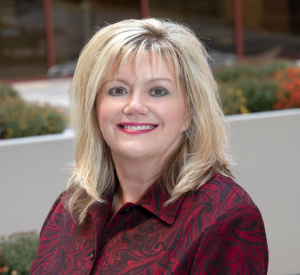
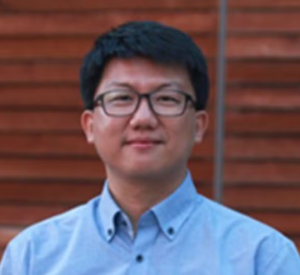
“Dr. Kim Peterson was my advisor and she was great and very helpful, I really enjoyed the classes that she taught,” Bloss said. “I also worked with Dr. Yong Choi. He taught the Applied Artificial Intelligence and Design Thinking for Health Informatics class where we had to develop a project. Our project focused on endometriosis, which is a topic that is near and dear to my heart. We developed a project that would be a pop-up for primary care to be aware of somebody who might have endometriosis and get either additional imaging or refer to an OB-GYN for further evaluation. It was a really cool experience to work on that.”
Peterson shared about Bloss’ enthusiasm in the classroom.
“Chris was a delight to have in class,” Peterson said. “His participation and input were greatly appreciated. His energy was always positive as he sparked meaningful conversation and encouraged the class to contribute as well.”
Connections with Peers
While Bloss’ peers all came from various backgrounds and were attending the courses virtually, he shared that it was important to him to make meaningful connections with them during his time in the program.
“I was definitely one of those people that would talk during the synchronous sessions,” Bloss said. “I found that most of us that were talking were older and the younger people tended not to even have their camera on. During our breakout sessions I would ask them to turn their cameras on, because I’m interested in people and I wanted to learn about them, where they were located, if they had a family. I definitely made connections with some of the students, which made me really happy.”
While the courses were conducted entirely online, those connections proved to extend beyond the virtual classroom.
“My wife and I were able to drive to Pittsburgh for graduation and there were a couple of people from the program who saw me and wanted to finally talk with me in person,” Bloss said. “It was really cool of them to look for me, and it also made my heart very happy to be able to meet Kim and Yong in person and thank them face to face for helping me.”
Capstone Project
In addition to the required coursework, Bloss also participated in the optional three-credit capstone project offered to MSHI students. The capstone project is intended to deepen understanding of professional practice aspects of the HI field. Bloss’ capstone examined the career pathways for HI professionals and understanding the representation, or lack thereof, of CMIOs and OB-GYNs in clinical informatics.
“Historically these specialties, particularly OB-GYN, have not been represented because we’ve got a lot of responsibilities in terms of surgery, inpatient care, ambulatory, emergency room and obstetrics,” Bloss said. “The CMIO pipeline bias originally favored cognitive specialties like internal medicine, family practice, pediatrics and pathology, and there’s been limited integration of women’s health service lines in information technology governance.”
Ultimately, Bloss hopes that more research into this topic will improve patient care, both within and beyond those he treats himself.
Recommending the MSHI Program
One of the things that Bloss appreciated about Pitt’s MSHI program was its ability to adapt to real world developments in the field, such as artificial intelligence (AI).
“The courses were open about addressing AI, which is huge right now,” Bloss said. “It’s really transforming health care. I use it on a daily basis now because I’m using an AI scribe and using an large language model to refine my notes. The program helped me feel more comfortable using that and knowing when to question things, so that’s great.”
For other nontraditional learners like Bloss, he emphasized that the program would be a positive addition their professional aspirations.
“The program gave me very good, both broad and specific, knowledge,” Bloss said. “It gave me challenges, but it wasn’t so difficult that I couldn’t manage it with my career. I love to learn new things and medicine in itself is a specialty with lifelong learning, so I loved getting this master’s degree and could see myself doing another one in the future. The University of Pittsburgh’s got a great program for new and established health care professionals looking to become more fluent in informatics and technology.”