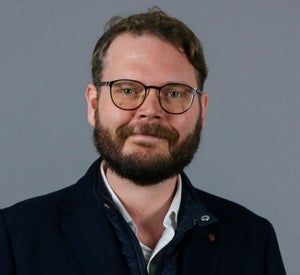
William S. Evans, associate professor in the Department of Communication Science and Disorders at the School of Health and Rehabilitation Sciences (SHRS), University of Pittsburgh, is leading a National Institutes of Health (NIH) awarded project alongside an interprofessional team of researchers focused on mental health improvements in stroke survivors with aphasia, a language disorder that affects the ability to speak, read, write and comprehend.
The five-year grant, titled “Improving Mental Health in Stroke Survivors With Aphasia Via Integrated Communication Strategy Training and Acceptance and Commitment Therapy,” was awarded $3,178,476 by the NIH National Institute on Deafness and Other Communication Disorders (NIDCD).
The team developed acceptance and commitment therapy (ACT) for aphasia, a counseling approach adapted for people with aphasia and designed to be delivered by speech-language pathologists (SLPs). ACT is a well-established form of therapy that uses mindfulness techniques and focuses on personal values. The goal is to shift how patients relate to emotionally painful experiences. This allows them to lead rich and meaningful lives—even when the source of that pain (like challenges communicating) cannot be perfectly controlled or eliminated.
In their version, ACT is paired with individualized communication strategy training. ACT helps patients build flexibility and willingness to re-engage with their lives and connect with others, while strategy training provides key skills to help them do it successfully.
The initial phase 1 pilot study, funded by NIH National Institute of Child Health and Human Development, showed that the approach was feasible, well-accepted by patients and reduced psychological distress.
The new award from NIH NIDCD will fund a phase 2 randomized controlled trial over the next five years to more rigorously test whether ACT for Aphasia can significantly improve mental health and functional communication for stroke survivors in the United States.
Read on to learn more about Evans’ research, and the ways it benefits aphasia patients, in his own words.
Recognizing a Gap in Stroke Recovery
Our long-term goal is to address a key gap in stroke recovery by making mental health services a standard component of comprehensive aphasia rehabilitation. Aphasia rehabilitation research and clinical practice tend to focus on the language and can ignore the mental health impact.
Stroke survivors with aphasia experience high rates of depression and anxiety (both more than 40%) at approximately twice the rate of stroke survivors without aphasia. It can be a vicious cycle: poor mental health can get in the way of language recovery, and poor language recovery can make mental health worse.

We developed a version of ACT for Aphasia that SLPs can deliver within their scope of practice. Many SLPs already do a lot of informal adjustment counseling as part of language rehabilitation, but others worry about addressing what can be an uncomfortable area of practice, especially if they feel that there is not sufficient evidence and training to support their work in this area. Our randomized controlled trial will help us learn what works, and if it’s successful, it can lead to future evidence-based training and workforce development for SLPs.
In addition to testing whether ACT for Aphasia works, we’re also doing implementation science—working directly with health care systems and therapists to figure out how to get this kind of mental health intervention into clinics and train people to deliver it well. SLPs can play a role in counseling people with aphasia, but we need to figure out how best to collaborate and coordinate with mental health and other rehab professionals.
Research Impact
More than two million Americans are living with aphasia. That’s more than the number of people living in the cities of Pittsburgh and Philadelphia combined. Many struggle to access mental health services because mental health professionals typically aren’t trained to work with people who have aphasia, and SLPs need more training and research support to provide services in this area.
For example, imagine a grandfather who had a stroke and can no longer find the words to talk to his grandchildren—if he withdraws, the isolation and shame can compound his communication difficulties. His speech therapist, who he already trusts and sees regularly, could use ACT for Aphasia to help him work through these painful experiences while building practical communication strategies at the same time. He would learn not just how to communicate better, but how to keep moving toward (instead of pulling away from) the things that matter most to him, like connecting and spending time with the people he loves.

Because we’re doing early-stage implementation research alongside our clinical trial, we’re not just proving something works in a lab—we’re actively working with health care systems to think ahead about how to get more effects counseling services into clinics.
Interdisciplinary Team
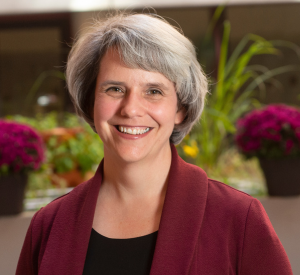
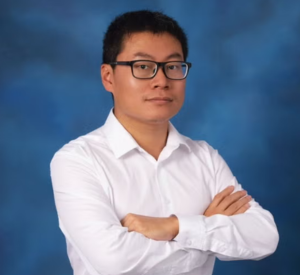
This work relies on a strong interdisciplinary research team and aphasia community collaborators. Our team from Pitt SHRS includes Eric Meyer, professor and chair, Department of Counseling and Behavioral Health; Elizabeth Skidmore, professor and associate dean for research, Department of Occupational Therapy; and Xingyu “Mark” Zhang, associate professor, Department of Communication Science and Disorders.
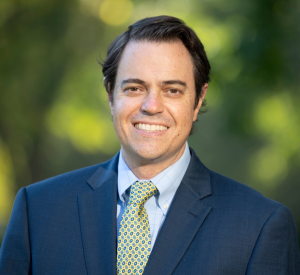
We also have collaborators outside of Pitt. This includes Rebecca Hunting Pompon, associate professor, University of Delaware; and Tyson Harmon, associate professor, Brigham Young University; who bring in expertise in qualitative research and mental health assessment for people with aphasia to make sure we understand participant experiences and carefully measure what matters.
Our Aphasia Community Advisory Board includes people with lived experience of aphasia and care partners who are aphasia nonprofit leaders from around the country. They help us stay grounded and focused on real community needs.
It’s Possible at Pitt
Pitt has the infrastructure: state-of-the-art lab spaces through the Pittsburgh Translational Aphasia Research Initiative, and the administrative support that makes complex clinical trials possible. We have faculty across disciplines—speech-language pathology, psychology, occupational therapy and policy—all here and committed to collaboration.
Established relationships with major rehabilitation systems in the region mean we can recruit participants and critically implement what we learn. Pitt’s connections to policy experts and health care systems are essential for the implementation science side of this work. We’re embedded in actual clinical systems, not just working in a lab. For Pitt, this positions SHRS as a leader in a growing movement to make aphasia care truly comprehensive—rigorous, responsive and designed to reach real patients.
I really believe in this work. When I worked as an outpatient SLP at Massachusetts General Hospital and the VA Pittsburgh Healthcare System, I saw how much aphasia could affect the mental health of patients and their families. I was able to provide evidence-based aphasia rehabilitation in many areas, but the adjustment counseling I provided was mostly informal. Although it’s one of the eight main service delivery domains in the SLP scope of practice, there is limited counseling research using SLPs as primary providers. We’re trying to bridge that gap, developing effective interventions that can be integrated into real world practice.
Comprehensive aphasia rehabilitation needs to take a holistic person-centered approach. Although restorative behavior treatments are known to improve language ability, and improving these approaches is the focus of other research in my lab, they are far from a “cure.” Aphasia is typically a long-term chronic condition for stroke survivors who do not make early full recoveries. That is why this work focused on mental health is so important. I think there is so much more we can do to support the adjustment aspects of recovery to help people with aphasia live deep, rich and meaningful lives. I’m proud of the work we’re doing to help make that happen.