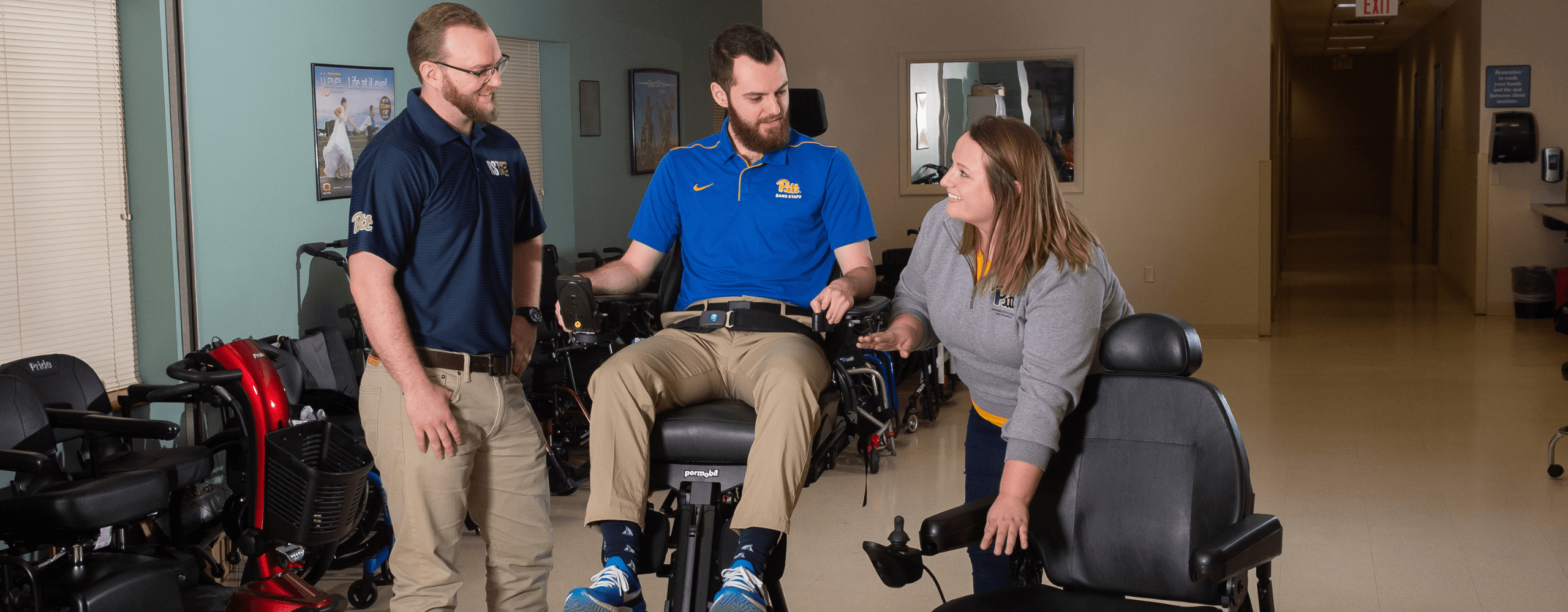
Prepare for in-demand jobs through Pitt’s Prosthetics and Orthotics state-of-the-art facilities, experienced faculty, exposure to innovative manufacturing facilities, and domestic and international internship opportunities. In our core clinical courses, patient models are introduced early in your academic experience to gain hands-on experience and client interaction. Acquire a wide range of experience under the supervision of experienced prosthetist orthotists and collaborate with physical and occupational therapists, rehabilitation engineers, physicians and researchers.
Application
Start Term
Fall term (August)
Application Opens
July 18, 2025
Application Closes
Application Closed
Commitment and Credits
Duration
2 years,
(5 terms, including 1 summer term)
Commitment
Full-time
Credits
65
Degree
Type of Degree
Master of Science
Format(s)
On-campus
Applied Skills
The curriculum includes a 340-hour clinical internship and capstone project.
Students take 7 credits of internship during the final term of the program. The Prosthetics and Orthotics (P&O) program has over 100 contracted location sites throughout the country. Students are highly encouraged to leave Pittsburgh and explore internship sites offering specialty practices that meet their interests.
Estimated Program
Costs
Certification
and Licensure
Upon successful completion of the NCOPE residency, students can take the certification examinations offered by the American Board for Certification in Orthotics, Prosthetics and Pedorthics (ABC).
Accreditation
The Master of Science Program in Prosthetics and Orthotics has been granted accreditation by the National Commission on Orthotic and Prosthetic Education (NCOPE). Our graduates are fully eligible to do an NCOPE residency.