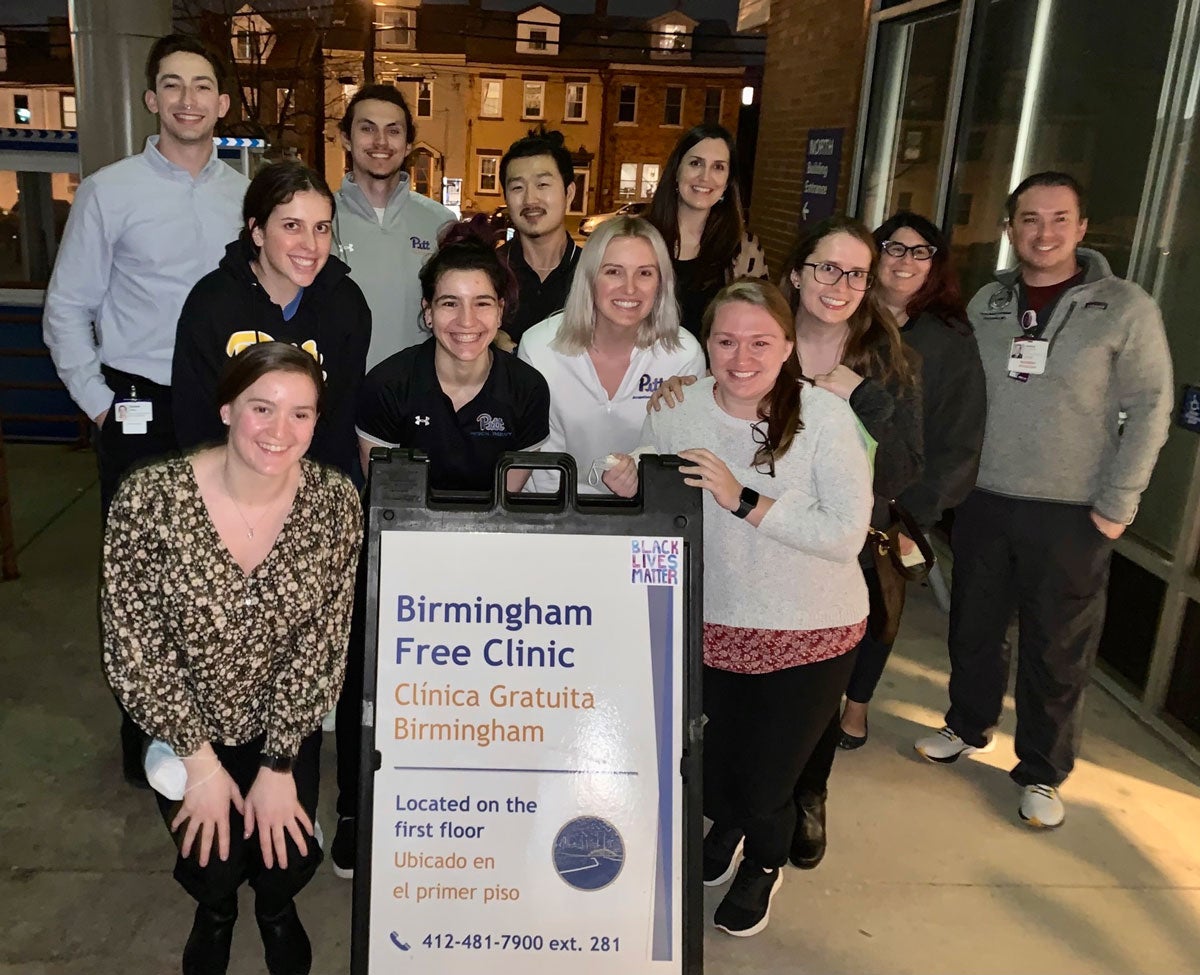
Teamwork is not a bonus in health care; it’s essential. Yet too often, care delivery suffers when providers operate in silos. At the University of Pittsburgh, Associate Professor Victoria Hornyak from the Department of Physical Therapy is helping to close that gap through interprofessional education (IPE), a teaching model that helps students learn with and from one another across health care disciplines.
“IPE has actually been around a long time,” Hornyak explains, “but its goal has never been more relevant: helping future providers understand how to work in teams.”
By bringing together learners from medicine, nursing, pharmacy, social work, public health, dental medicine and rehabilitation sciences, Pitt’s IPE initiatives teach tomorrow’s clinicians that collaboration is not an optional soft skill but a core clinical competency.
A New Model for Health Care Teams
The spirit of interprofessional education rests on trust and mutuality. Hornyak describes IPE as an intentional challenge to outdated hierarchies that once defined health care teams.
“Anyone can lead a team at the appropriate time,” she says. “Each profession has a unique body of knowledge and great care happens when those strengths complement each other.”
In this model, leadership is shared and situational. A physical therapist might recognize an issue that requires a physician assistant’s input, or a speech-language pathologist might flag a concern best addressed by a social worker. The result is a more responsive, patient-centered approach, where no single provider is expected to know everything, but every provider is confident in how to collaborate effectively.
The Interprofessional Forum
Hornyak’s enthusiasm for IPE is particularly evident each fall during the Interprofessional Forum, a large-scale introductory event that brings together 1,300 first-year students from Pitt’s six schools of the health sciences, the School of Social Work, the Swanson School of Engineering and others.
Facilitators, paired with students and professionals from different fields, lead discussions on teamwork and communication. Before the sessions start, Hornyak asks facilitators to reflect on their most positive experiences working with other health care professionals and to share those examples. The idea is to model mutual respect and set the tone for what effective collaboration looks like in practice. Other IPE activities go beyond broad team building and focus on specific partnerships. One required experience for Pitt physical therapy students pairs them with physician assistant students to practice referral communication.
“It’s a simple exercise with a big payoff,” Hornyak explains. “Students learn what happens on the other side of the referral pad and gain a deeper understanding of each other’s roles.”

Embracing Caregiver Knowledge
Hornyak’s commitment to collaboration also extends beyond providers to include patients and caregivers as integral members of the health care team. With colleagues Elaine Mormer, vice chair for clinical education and professor in the Department of Communication Science and Disorders, and Elizabeth Mulvaney, direct practice chair and clinical assistant professor from the School of Social Work, Hornyak received an SHRS IPE Seed Award for their project titled, “The Caregiver as a Member of the Healthcare Team,” in which caregivers join small-group discussions with students from multiple professions to explore what they need to be truly effective members of a care team.
“The patient is always part of the team,” Hornyak notes, “but caregivers are often overlooked. They hold critical knowledge about day-to-day realities and we are teaching students how to partner with them more effectively.”
The Office of Interprofessional Education
Hornyak’s trajectory in IPE began in 2010 when she joined Pitt’s Working Group on Interprofessional Education, a grassroots committee of faculty interested in improving teamwork in health care. Over time, she chaired that group and helped it evolve into what is now the Office of Interprofessional Education. It is formally recognized by the University and co-directed by Hornyak, Mary Goldberg, associate dean for interprofessional studies in the School of Health and Rehabilitation Sciences, and Jackie Calhoun, coordinator of the Acute Care Pediatric Nurse Practitioner program in the School of Nursing.
“This is something I’ve wanted for over ten years,” Hornyak says. “Having a formal structure and senior-level support means we can finally build a true university-wide IPE curriculum.”
Under the guidance of Paul Wallach, vice chancellor for health sciences education, the office is developing new initiatives, including themed, small group learning communities focused on bioethics, sustainability and culinary medicine.
The impact of these efforts is already measurable. Early data from IPE assessments show positive trends in students’ confidence in teamwork and communication skills. Still, Hornyak acknowledges the practical challenges that come with coordinating across multiple programs.
“Scheduling is one of the biggest barriers,” Hornyak said. “Our programs start in different months and follow different clinic timelines, so it can be difficult to get everyone together.”
Virtual events have helped bridge those gaps by including Pitt’s branch campuses and hybrid programs, but she recognizes that students still crave in-person connection.
“We’re finding ways to do both,” she says.
The Holy Grail of IPE
But behind the logistics is a bigger challenge for the field itself: to demonstrate, through research, the link between better teamwork and better patient outcomes. This is what Hornyak calls “the Holy Grail of IPE.”
“It’s difficult to isolate the effect of collaboration from all the other factors in care,” Hornyak explains.
She says some studies have found that interprofessional teamwork reduces error rates and decreases burnout, but proving its direct impact on patient outcomes is complicated. Still, she believes the effort is worth it.
“In your gut, you know it’s the right thing,” Hornyak said. “Of course, if you have better teamwork and better collaboration, how could that not improve care?”
For Hornyak, the motivation is at once professional and deeply personal.
“I’ve always felt most energized in my career when the team was clicking on all cylinders,” she reflects. “It feels right when everyone is working together toward the betterment of the patient. The exciting part now is creating systems where that happens by design, not by accident.”
She is quick to add that the success of Pitt’s IPE efforts is itself the product of collaboration.
“We wouldn’t be here without the people who championed this work from the beginning,” Hornyak said. “Collaboration is literally how we got here.”