In Gorongosa National Park in the heart of Central Mozambique, ecotourism is on the rise. While more than 90% of its African elephant population was depleted during a 15-year civil war that ended in 1992, baby elephants are once again roaming the savannas of this beautiful country.
But that’s not all.
Thanks to the Gorongosa Restoration Project (GRP), a public-private partnership between the Carr Foundation and the Government of Mozambique, Gorongosa National Park has been transformed from a post-conflict landscape into a global model of integrated conservation, science, education and community development. From the beginning, it was never just about wildlife; the goal is to restore and protect 2 million hectares of biodiversity while creating lasting prosperity for the 250,000 people who live there.
Now, in alliance with the University of Pittsburgh Health Sciences, the GRP is creating a comprehensive care system that empowers communities with knowledge, access and agency—turning health from a privilege into a right.

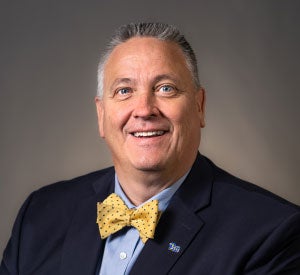
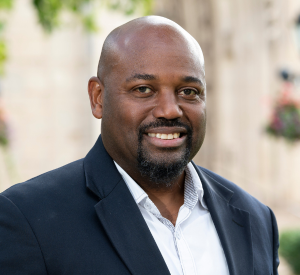
In November 2025, Emergency Medicine program Professor Thomas E. Platt, chair of the Department of Community Health Services and Rehabilitation Science, and Sheldon Williams, Emergency Medicine assistant professor and recently named City of Pittsburgh public safety director, traveled nearly 30 hours to Gorongosa to teach an Emergency Medical Responder course to GRP team members.


They brought with them tools from the Emergency Medicine program—vital equipment necessary to train and function in the field, including CPR manikins and automated external defibrillators (AEDs). They wanted to increase local capacity to respond to emergency medical situations and to gather information about how to best adapt an American curriculum to meet the unique needs and limited resources of the area.
For 15 days, Platt and Williams trained 32 enthusiastic Mozambicans. They ranged from employees of the GRP communications office to park rangers and members of mobile health brigades.
“The students were fantastic,” says Platt. “They were hungry for knowledge and eager to learn. They took full advantage of the opportunities presented to them.”
“Once they understood basic concepts, they quickly began asking questions and practicing how standard procedures could be adapted in the local remote areas,” continues Platt.
For example, access to stretchers in the region is limited, so Platt’s students practiced ways to safely move a patient who might be in a splint over rough terrain or for a long distance without causing any further injury.


While the curriculum includes a component dedicated to using AEDs, the Pitt team learned that no AEDs currently exist in the park. So, they provided the skills training with the “hope that future funding will subsidize more AEDs and the locals will already know how to use them,” adds Platt.
The instructions were well-received by the students.
“You can do things for people and to people, but the most successful projects are those you do with people,” observes Williams.
By starting with the GRP staff, this project is a first step in doing work with, for and by the people of Gorongosa.
During a weekend “Stop the Bleed” course, Platt and Williams taught additional life-saving skills to a group of eight Mozambicans. Among other things, they learned how to apply tourniquets and perform hands-only CPR.

Jessica Griffin Burke, associate vice chancellor for global affairs, health sciences, is spearheading Pitt’s involvement in Mozambique and the GRP partnership. She has recruited faculty from across the schools of the health sciences to work with GRP staff and the people who live in the sustainable zones around Gorongosa National Park.
“By partnering with GRP to revitalize the local health system, we are realizing the University of Pittsburgh Health Sciences’ global health expansion goal of establishing strong and deep relationships in low-resourced settings,” says Burke.
Pitt is committed to GRP for the long-haul. This is not a short-term clinic or relief effort. It is a generational investment in health systems change—designed to be both financially and operationally sustainable.
“This project aims to build a sustainable model for health care,” adds Platt. “By improving the health of the people who live around Gorongosa National Park, we open doors for them to work at a variety of jobs in and around the park, boosting their sense of pride as well as their financial stability.”


“The idea that safari tourism—including the opportunity to see baby elephants—will be used to fund health care projects in the area,” continues Platt. “It is truly remarkable.”
Companies and foundations have also pledged to continue to invest in Gorongosa and return a portion of their profits to the GRP.