
Overview
Fieldwork education and the doctoral capstone are essential components of professional doctoral preparation and are integrated in the OTD curriculum design. These learning experiences prepare students to assume the roles of practitioner, manager and contributor upon graduation from the program.
The OTD program requires students to complete fieldwork education experiences and a doctoral capstone experience (experiential preceptorship) at facilities external to the University of Pittsburgh. All OTD students are responsible for securing required resources and completing required documents to participate in fieldwork education and the doctoral capstone experience including but not limited to transportation, physical examinations and associated testing (i.e., drug screen, vaccinations), health insurance, liability insurance, background clearances, CPR/AED training, education modules, parking, housing, food and clothing.
Level II fieldwork and the doctoral capstone must be completed within 24 months following completion of the didactic portions of the OTD program.
NOTE: A felony conviction may affect a graduate’s ability to sit for the certification examination or attain state licensure.
Fieldwork Experience Overview
Fieldwork experiences provide students with the opportunity to learn professional responsibilities by having them modeled by qualified and experienced personnel and to practice these responsibilities in a supervised setting.
Fieldwork education prepares graduates to thrive as confident, compassionate and practice-ready clinicians. Through immersive experiences and personalized mentorship, students learn how to bridge the gap between classroom learning and professional practice — building the skills, values and professional identity that define an exceptional occupational therapist.
Fieldwork education includes Level I and Level II experiences.
Level I:
- Students develop strong foundations for clinical practice
- Engage directly with clients and communities
- Practice essential communication and interpersonal skills and begin shaping their professional identity within real-world clinical settings
Level II:
- Takes students to the next level and advances them towards practice-readiness
- In-depth clinical placements are tailored to the students’ interests and career goals
- Guided by expert fieldwork educators and supported by a strategic placement process
- Challenges students to critically think, act ethically and deliver evidence-based care.
The OTD program only uses sites within the United States that allow for supervision by an occupational therapist who meets state regulations and has a minimum of one year of practice experience, following initial certification.
| – | Level I Fieldwork | Level II Fieldwork |
|---|---|---|
| When | Terms 2 and 4 | Terms 5 and 6 |
| Where | Clinical/community sites in the Greater Pittsburgh Area that have a signed agreement with SHRS and meet the criteria for Level I fieldwork supervision. | Clinical sites within the United States that have a signed agreement with SHRS and meet the criteria for Level II fieldwork supervision. |
| What to Expect | Designed to enrich didactic coursework through engagement and participation to develop the student’s professional identity. | In-depth experience in delivering occupational therapy services to clients in traditional and/or emerging settings. |
| Time Commitment | Includes 4 clinical/community experiences that are each one (1) day per week for five (5) weeks. | Minimum of the equivalent of 24 full-time work weeks. |
Doctoral Capstone Overview
The Doctoral Capstone provides an in-depth capstone experience and includes the completion of capstone projects. The focus of the Doctoral Capstone is on the development of skills for increased autonomy as a contributor in advancing occupational therapy practice.
During the course of their capstone experience, students will experience:
- Personalized Placement: Students rank populations and practice settings of interest for their immersive experience. This information is used to create a personalized match with a community partner site that aligns with each student’s goals and interests.
- Collaborative Learning: Students engage with their sites both at a peer level — through a professional peer network — and individually, by completing an individual capstone project. This structure promotes personal and professional growth, particularly in communication and collaboration skills.
- Skill Development Beyond Clinical Practice: Students gain competencies beyond direct clinical skills, including program and project development, asset mapping, quality improvement, grant writing, and the dissemination of innovative, evidence-based practices. These experiences prepare students to be expert clinicians who are also capable of taking on leadership roles and contributing to quality improvement initiatives.
- Mentorship and Guidance: Each student receives mentorship from two sources:
- A site mentor, who is an expert in the specific population and setting.
- A faculty mentor, who provides guidance and support through an occupational therapy lens.
- Evidence-Based Practice: Students develop a Clinical Practice Guideline (CPG) and deepen their understanding of how to apply evidence to drive meaningful change as they transition into the professional workforce.
| – | Doctoral Capstone |
|---|---|
| When | Term 8 |
| Where | Community sites in the Greater Pittsburgh Area that have a signed agreement with SHRS and meet the criteria for the doctoral capstone experience |
| What to Expect | An in-depth experience in clinical skills, research skills, administration, program development and evaluation, policy development, advocacy, education and/or leadership and includes the completion and implementation of capstone projects. |
| Time Commitment* | 16 weeks (1 term), 512 hours |
*Prior fieldwork, volunteer, and/or work experience hours cannot be applied towards doctoral capstone experience hours and a student’s current work setting cannot serve as their doctoral capstone experience site.
Hear From Our Students

Getting to know our OTD students: Kara Travanti
Learn from Kara about her experiences in fieldwork and clinical settings, and the meaningful connections she made with faculty and colleagues while in the Doctor of Occupational Therapy program.
Read the full story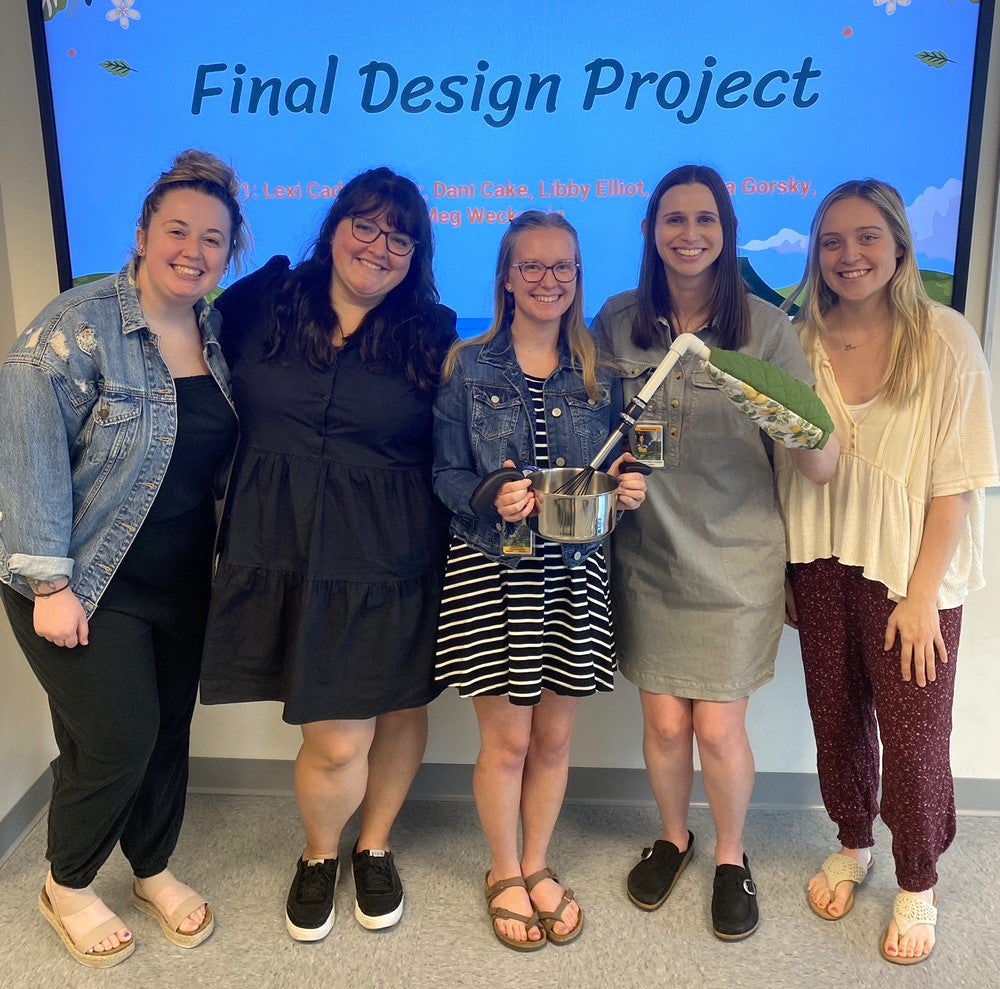
Get to Know Doctor of Occupational Therapy Student Dani Cake
Learn why this OTD student chose occupational therapy, her favorite classes and exciting opportunities at Pitt OT!
Read the full story