Episode Summary
The SHRS Data Center provides state of the art data management and analysis services to the six Pitt Health Sciences schools, including the School of Health and Rehabilitation Sciences (SHRS).
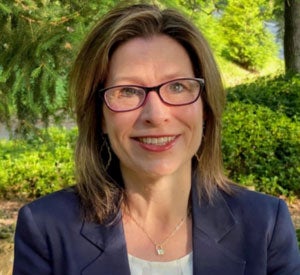
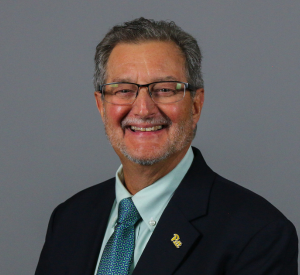
Charity Patterson, professor of physical therapy and director of the SHRS Data Center, talks with Regan Harrell, assistant professor of physical therapy, about the inception of the SHRS Data Center, and how it benefits the Pitt Physical Therapy Department, and the School of Health and Rehabilitation Sciences as a whole.
Episode Audio
Episode Transcript
If you could just give us a little introduction of what your background is and how you got to Pitt and why the data center started, that would be great.
So I’m Charity Patterson. I have a PhD in biostatistics and I finished my degree in 2000. My undergraduate degree was actually in mathematics and statistics and I thought I was going to be an actuary, but going to actuarial sciences, but my professor in undergrad told me that I was really too much of a people person.
Can you can you speak a little bit to how the data center within SHRS was started and sort of what led to it being created?
So in 2017, I actually was working for a health care system in North Carolina. I had exited the University of Pittsburgh to work for another group for a short period of time, but I got a phone call from Dr. (James) Irrgang and they had just received a huge award from the Department of Defense to study people who have multiple ligament knee injury. So multiple tears of different ligaments.
Could you sort of talk a little bit, you talked about collaboration, but from the statistics side and the methodology side, what does, do you in the data center bring to some of these research projects they did?
Some, probably one of the few statisticians in the nation that knows what a “timed up and go test” is and a “single leg balance test” is and range of motion for the knee and, you know, quadriceps strength and gate speed. Like I, you know, it’s the one thing. So when you get a statistician that’s kind of embedded in a group, we start to learn all of the outcomes and the things that you measure that are important to patients.
So it sounds like you guys have grown from just a single person, and so now how many people are in the data center with you?
We started with three individuals. I had a statistician, I had a data manager, and I had a systems analyst that builds data collection systems. We started with three people in 2017. We have eight people now involved, one of whom is a financial administrator, so I need someone just to keep up with the dollars.
Of the projects that you guys have worked on within the data center since its inception, I’m sure you’re proud of all of them, but is there one that surprised you?
Might have been 2011. And that same individual that I worked with in Chicago was working with Dr. (Tony) Delitto in trying to plan an exercise study in people who had just been diagnosed with Parkinson’s disease. We wanted to do this in humans. So I ended up being the statistician that got to design that trial. He submitted a proposal to NIH and one of their initial responses is, “It’s just exercise. Why would this matter?” And we never forgot it.
So we got the funding for a phase two study for 25 sites and we’re going to follow them for two years and we actually will be able to see how exercise affects the brain. So we’re getting imaging from those individuals.
So as we train our PT students to go out into the field, what would you tell them in terms of getting into clinical research?
Just don’t be afraid of reading the results, you know, don’t take the discussion and the conclusion for what the people in the article stated. Like, you know, in terms of the clinical practice, I don’t think that everyone has to be a statistician or be able to do their own, but be a good consumer of it. And then, you know, on a very technical side, we joke that Excel is not a data management tool. And so you know, if you are going to take on a research project, it takes a multidisciplinary team.
In one sentence, how would you describe the data center’s role within the PT department’s research mission?
Our role is to really help researchers design the studies, implement the studies and make sure that we put our best data forward. So not our best foot forward, but put our best data forward. And then it’s reproducible research so that it can be translatable for people who are in clinical practice, make good studies. That’s always my goal.