Department of Health Information Management

Overview

As the demand for quality health care rises, so does the need for accurate and reliable patient data. Pitt’s Department of Health Information Management is a leader in providing students with high quality education and immersive internships that prepare them to meet future data management challenges across the ever-changing landscape of health care.

Our faculty are committed to developing the next generation of health information professionals. They serve at the highest levels of regional, national and international HIM professional associations and conduct research that advances the quality of care for patients. Collaboration with other health care disciplines allows them to successfully research and develop new tools and technologies, including mobile health applications, classification systems and other data management solutions.

Outcomes

The health information management and health informatics accreditor of the University of Pittsburgh School of Health and Rehabilitation Sciences is the Commission on Accreditation for Health Informatics and Information Management Education (CAHIIM). The College’s accreditation for the master degree in health informatics has been reaffirmed through 2032-2033. All inquiries about the program’s accreditation status should be directed by mail to CAHIIM, 200 East Randolph Street, Suite 5100, Chicago, IL, 60601; by phone at (312) 235-3255; or by email at info@cahiim.org.

This data was collected for the time period of September 1, 2024, to August 31, 2025.

  • Average time to degree completion: 16-24 months (depending on full-time or part-time enrollment status)
  • Percent employed post-program completion: 85.7% employed post-graduation
  • Program graduation rate: 98.5%
  • Retention Rate: 85.6%
  • Student Satisfaction: Based on an optional Student Satisfaction Survey, 83% of respondents would recommend the MSHI program to others.

The Health Informatics accreditor of University of Pittsburgh is the Commission on Accreditation for Health Informatics and Information Management Education (CAHIIM). The College’s accreditation for Baccalaureate degree in HEALTH INFORMATICS has been reaffirmed through 2032-2033. All inquiries about the program’s accreditation status should be directed by mail to CAHIIM, 200 East Randolph Street, Suite 5100, Chicago, IL, 60601; by phone at (312) 235-3255; or by email at info@cahiim.org.

For the class of 2025:

  • Graduation Rate: 97%
  • Retention Rate: 97%
  • Students Employed or Continuing Education ~6 months post-graduation: 84%

Programs

Scholarships

AI Summer School

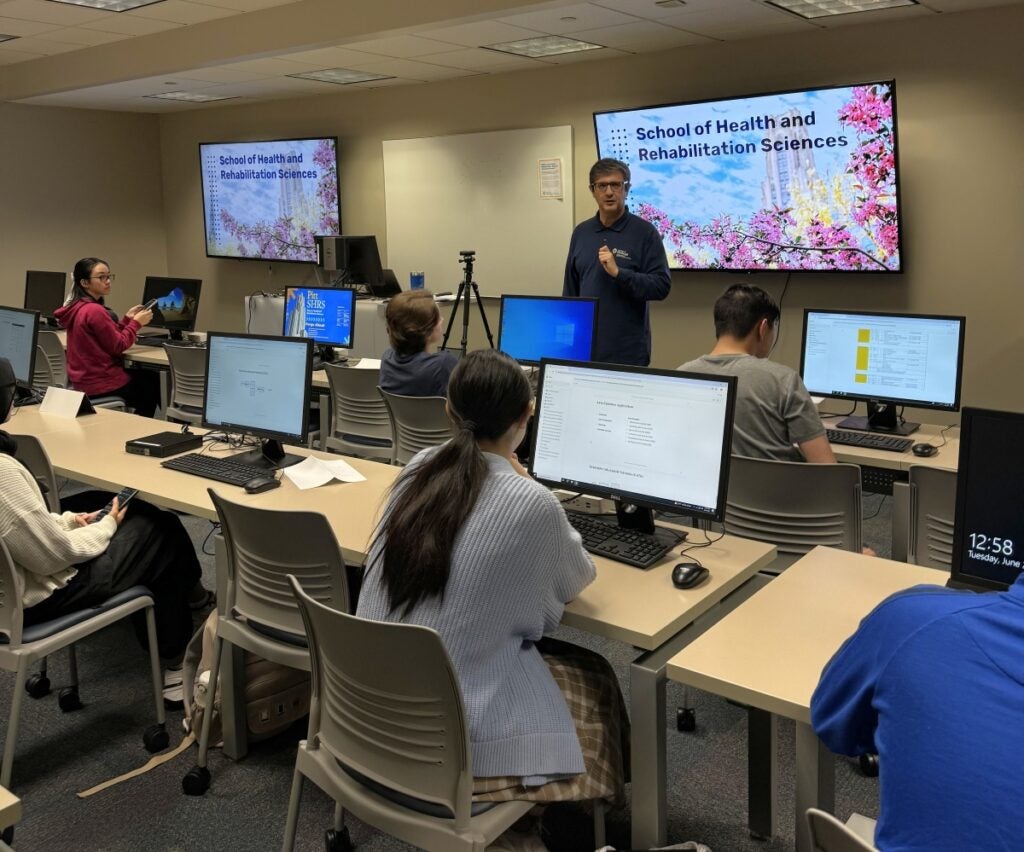
A professor stands at the front of a classroom with students sitting in front of computer stations.
Ahmad Tafti, director of the Pitt HexAI Lab and assistant professor, Department of Health Information Management, leads instruction at the 2024 AI-Powered Medical Imaging Informatics summer school.

What is this program?

Our Artificial Intelligence (AI) Summer School organized by the Pitt HexAI Research Laboratory and in collaboration with the Computational Pathology & AI Center of Excellence (CPACE), the School of Health and Rehabilitation Sciences and IEEE Computer Society, aims to provide a stimulating unique, and all expense paid opportunity to dive into the fascinating world of AI and its application in medical imaging informatics.

Medical imaging informatics leverages AI-driven computer vision to analyze and interpret medical images for better diagnosis and treatment. A key area of focus is object detection and localization, where AI systems identify and locate relevant features within medical images.

This program was established in 2023 and occurs annually.

Who is this for?

The program hosts 50 students. There are 25 seats for in-person and 25 seats available to attend online via Zoom.

This program is available to students in grades 11 and 12 (high school) and community college students with a keen interest in advanced technology, health care informatics and artificial intelligence (AI). Students from all backgrounds and levels of experience are encouraged to apply.

Students must be familiar with Basic Python Programming. If not familiar with this prerequisite, you can learn more by following the link here.


When and where is the program?

The AI Summer School is a week-long program. It starts on Monday, June 8 and goes to Friday, June 12, 2026.

Location (in-person):

University of Pittsburgh | School of Health and Rehabilitation Sciences
3396 Fifth Avenue
4th Floor, Room 4608
Pittsburgh, PA, 15213

Location (online): Zoom (link will be provided)!

Register for this summer’s program here! Registration closes on Friday, April 24, 2026, at 11:59 p.m. EDT.

What will I do?

This program will dive into these techniques, teaching participants how to apply them using Python programming. Through lectures, hands-on exercises and collaborative projects, attendees will gain practical skills in AI-powered medical image analysis, preparing them to tackle real-world challenges in the field.

  • Begin with foundational concepts, including an introduction to AI, computer vision and digital image operations, followed by hands-on practice with Python and Google Colab.
  • Explore advanced topics such as deep learning, convolutional neural networks (CNNs) and object detection techniques like “You-Only-Look-Once” (YOLO) and “Single-Shot Detector (SSD).
  • Attend lectures from esteemed University of Pittsburgh faculty
  • Participate in hands-on coding exercises
  • Listen to guest speakers and talks from AI researchers in academia and industry
  • Gain practical experience in medical image annotation, image filtering and object localization, utilizing tools like PyTorch, ITK-SNAP and Liner.ai

At the end of the week, students will cap their experience with a collaborative team project, where students apply their knowledge to real-world challenges, followed by team presentations.

Certification: Upon successful completion of the summer school, students will receive a certificate of participation, recognizing their dedication and achievement in AI-powered medical imaging informatics.

The Team

Organizing Committee

  • Ahmad P. Tafti, PhD, FAMIA
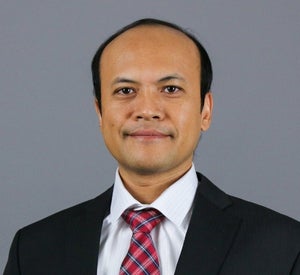
  • Hooman H. Rashidi, MD, MS
  • Liron Pantanowitz, MD, PhD

Program Directors

Instructors

  • Ahmad P. Tafti, PhD, FAMIA
  • Nickolas Littlefield, MS
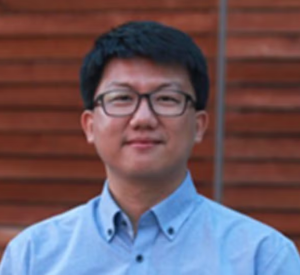
  • Fengyi Gao, MS
  • Yushui Han, MS
  • Chloe Fox, MSHI
  • Nicole Myers, RN, MSHI

Keynote Speakers

  • Yanshan Wang, PhD, FAMIA (University of Pittsburgh)
  • Shyam Visweswaran, PhD (University of Pittsburgh)
  • Farnaz Rezvani, MSc (IEEE Member)
  • Jamie Gramz (Siemens Healthineers)
  • Shabbir Bharmal (Leidos)
  • Hanieh Alasti (IEEE Member)
  • Mohammad K. Alexanderani, MD (University of Pittsburgh)
  • Davneet Minhas, PhD (University of Pittsburgh)
  • Rema Padman, PhD, FAMIA (Carnegie Mellon University)
  • Jeremy Minkowitz, DO (University of Pittsburgh)
  • Husam Ghazaleh, PhD (Benedictine University)
  • Jacob Mathew, MD, EMDM (University of Pittsburgh)
  • Lindsey Seigh, BS, M.Ed. (University of Pittsburgh)
  • Rose Olson, DC, M.ed (University of Pittsburgh)
  • Katayoon Dadkhah, MS (George Mason University)

Career Development


Research

The Department of Health Information Management is at the forefront of revolutionizing health care through advanced technology and research. It encompasses a wide array of research domains, including mHealth (mobile health) and digital health, which leverage mobile and telecommunications technology to remotely deliver healthcare services and information, enhancing accessibility and efficiency.

The department’s exploration into the natural language processing (NLP) of unstructured Electronic Health Records (EHRs) aims to harness critical data from clinical notes, improving patient care and supporting informed clinical decisions. Additionally, it focuses on medical imaging, utilizing machine learning and deep learning techniques to enhance the analysis of clinical images for more precise diagnoses and treatment plans. Our research is currently focusing on artificial intelligence (AI) in health and health care, aiming to transform patient care, diagnostics, treatment plans and health care management through AI algorithms and models. These efforts are complemented by the development of digital interventions, which employ digital platforms to implement therapeutic strategies for disease management and prevention.

By integrating AI, the department is not only innovating health care practices but also paving the way for a future where care is more personalized, predictive and preventive. Through its comprehensive research efforts, the department contributes significantly to the growth and evolution of health informatics, striving to improve patient outcomes and health care systems worldwide.

Research Areas

  • mhealth (mobile health)
  • digital health
  • artificial intelligence in health and health care
  • natural language processing
  • medical imaging informatics
  • Clinical Decision Support System utilizing the electronic health record
  • Development of Clinical Alert systems
  • Personal Health Record development in mobile applications
  • Data Analytics in healthcare
  • Development of best practices in Privacy and Security in telehealth

Active Research Labs and Projects


People

Student Groups

SHRS Affinity Groups
SHRS Student Advisory Board
Health Informatics Student Association
Health Informatics Graduate Society
Interprofessional Studies Student Group

Resources

Current Student Hub

Students can find access to program and school materials in the Current Student Resource Hub. Pitt Passport is required.

Current Students can also find answers to commonly asked questions and connect with valuable resources and contacts. This resource helps students locate academic guidance, professional development, or support for each individual’s wellbeing including things like counseling or study resources.